

With English alone, you will manage well in Sweden. But if you can study Swedish totally free, then why not? After my post about internship, I got quite a few questions about how I learn and practice Swedish outside the classroom. Here are my tips of what I have done so far over one year to develop my Swedish:
Duolingo:
When I first moved to Sweden, it took quite a long time to register for an SFI course because I needed a Swedish personal identity number. So, I decided to start with Duolingo to learn some basic vocabulary and grammar, which helped me prepare a little before officially starting my classes. The best part is that you don’t actually need to be in Sweden to start learning Swedish! Some of my friends started learning Swedish even before moving here.
University course
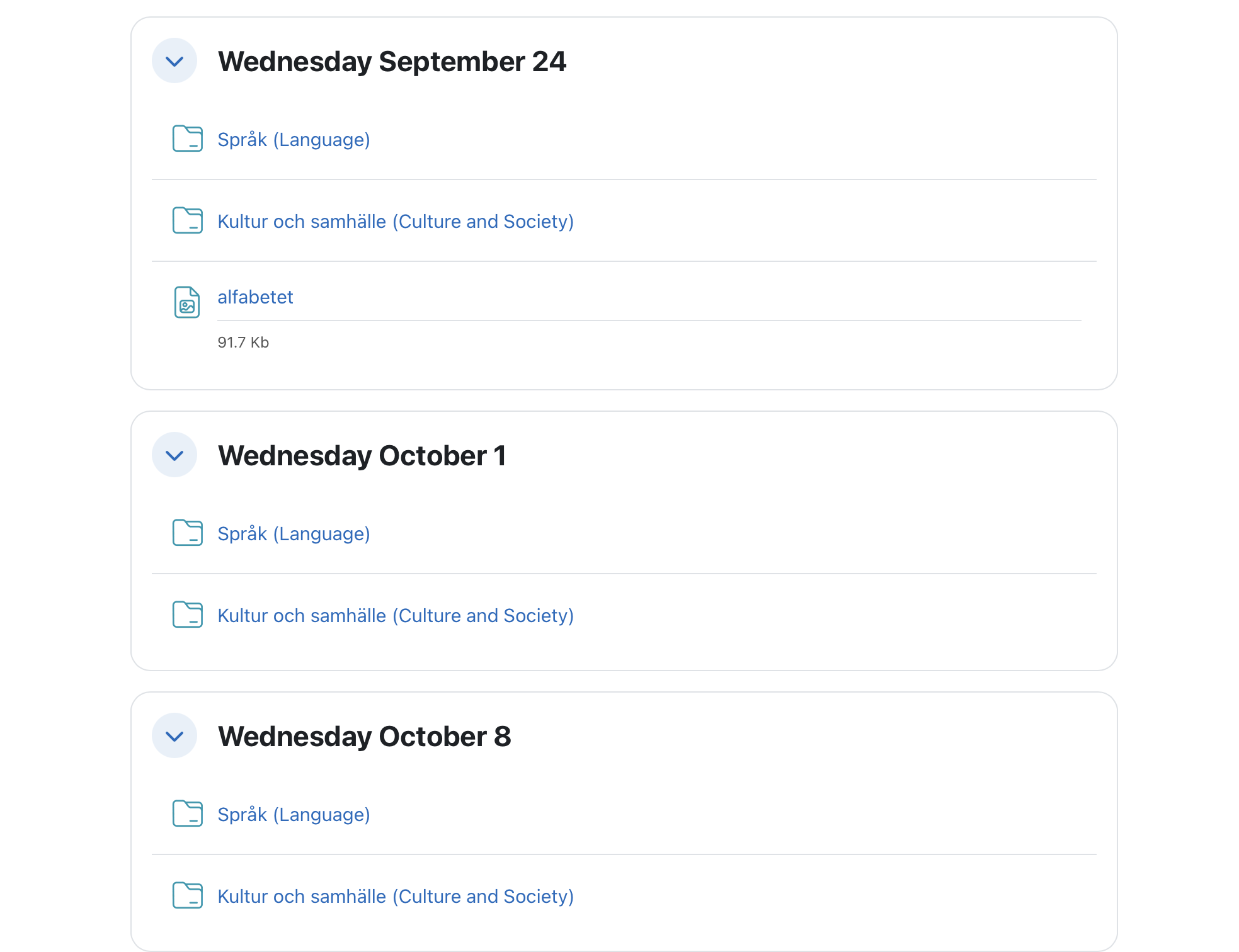
Weekly plan from my Swedish course at university
At first, I thought I would have to pay for a Swedish course at Linnaeus University. However, just one week after the autumn semester started, I received an email from the university about an online Swedish course. Surprisingly, it was completely free!
The course lasts eight weeks. Most of the time, you study independently using the programme and learning materials provided each week. However, every Wednesday, you have an online class with a teacher, where you can discuss your progress, ask questions and get updates and guidance on your studies. I think this course is a great option for people who don’t have much time to attend in-person classes. If you live outside Växjö, taking a distance course is more convenient! There are also other courses at different levels that you can explore to find one that suits you: https://www.lnu.se/en/course/basic-swedish/vaxjo-exchange-swedish-spring/
SFI
If you think about taking a Swedish course outside campus, then you should absolutely look up SFI.
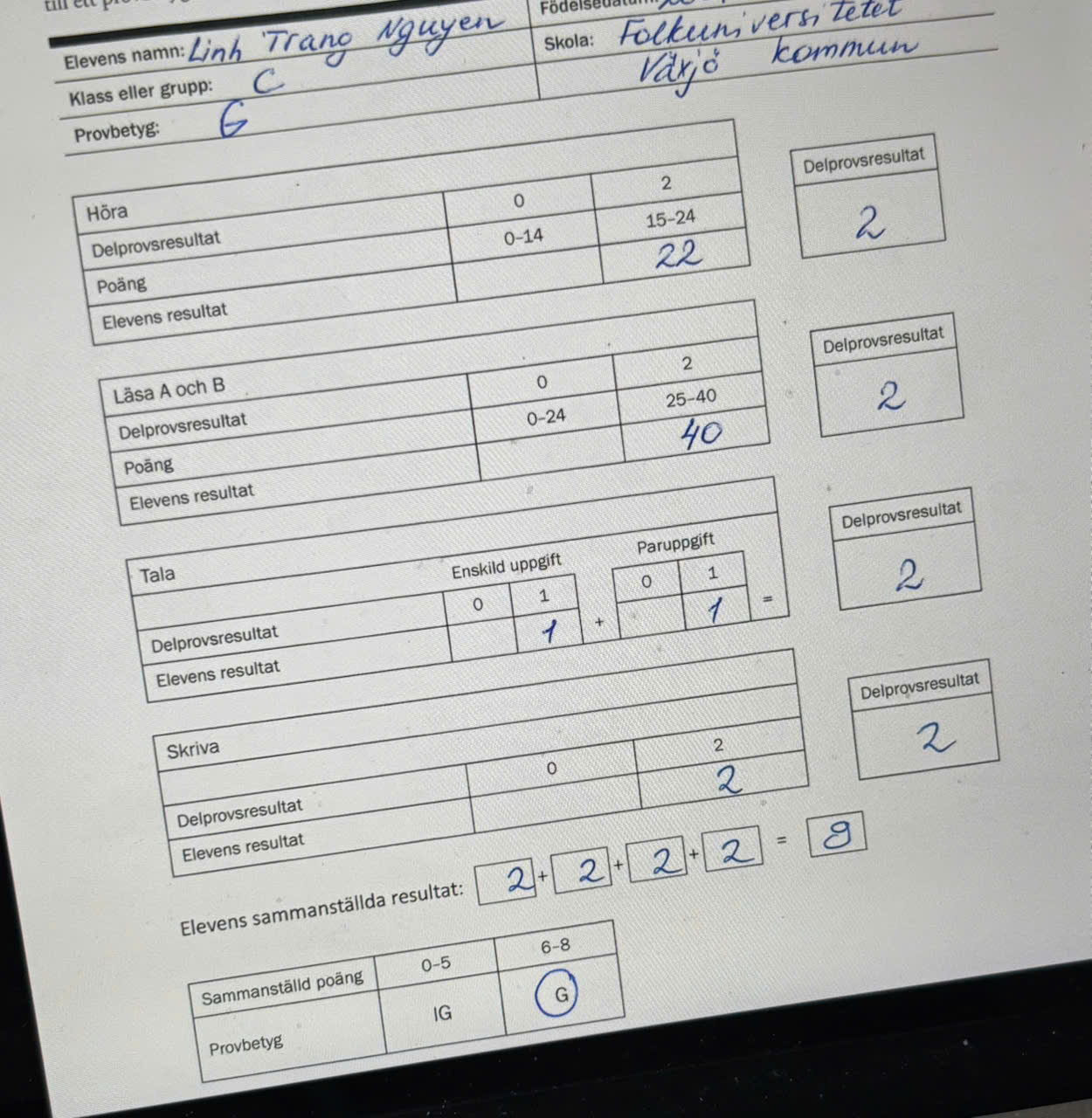
A test with 4 skills in SFI course
Swedish for Immigrants (SFI) or Svenska för invandrare, is a free language program in Sweden aimed at helping newcomers learn the Swedish language. It is offered by the municipality you live in, so the courses themselves and their offerings may vary slightly depending on where you live. In Växjö, my schedule is every Monday and Wednesday, from 5.15 –7.45 pm. At the SFI classes, you get to talk with friends and teachers in Swedish, which is good practice. However, two classes in one week isn’t really enough, you need to consistently practice new words and phrases outside of class to get the best results.
Språkcafé
There’s a very popular activity in Sweden called Language café (Språkcafé). At a language café, you can practise your language skills and develop your cultural understanding together with others who speak, or are learning, the language offered at the café (normally Swedish). You’ll get to meet other students, local people and volunteers, enjoy some “fika”, and have the opportunity to practise your language in a relaxed and informal setting.
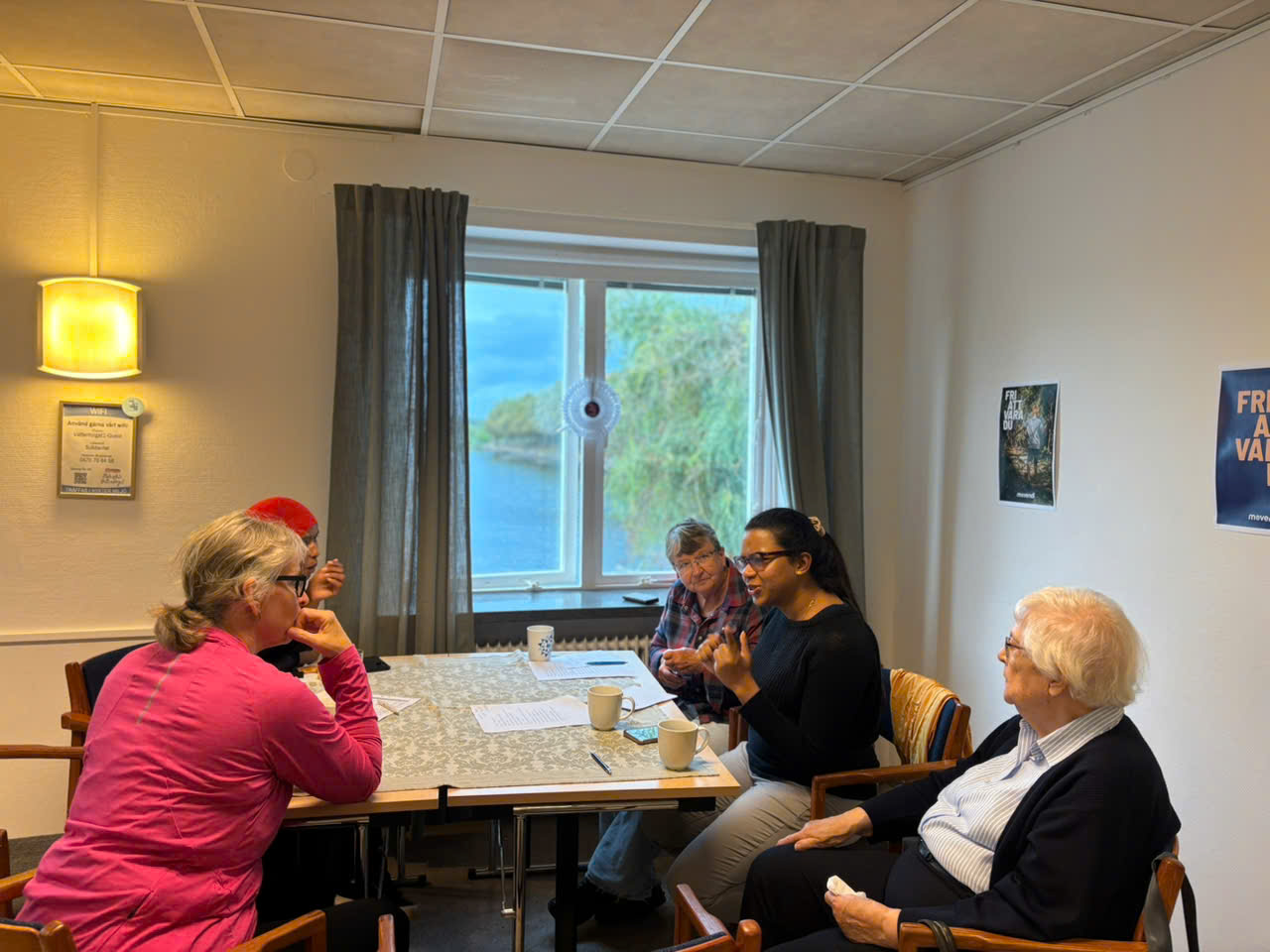
The language cafés are led by volunteer coordinators (not language teachers, but instead other students or locals). Here are some locations around Växjö that host language cafés:
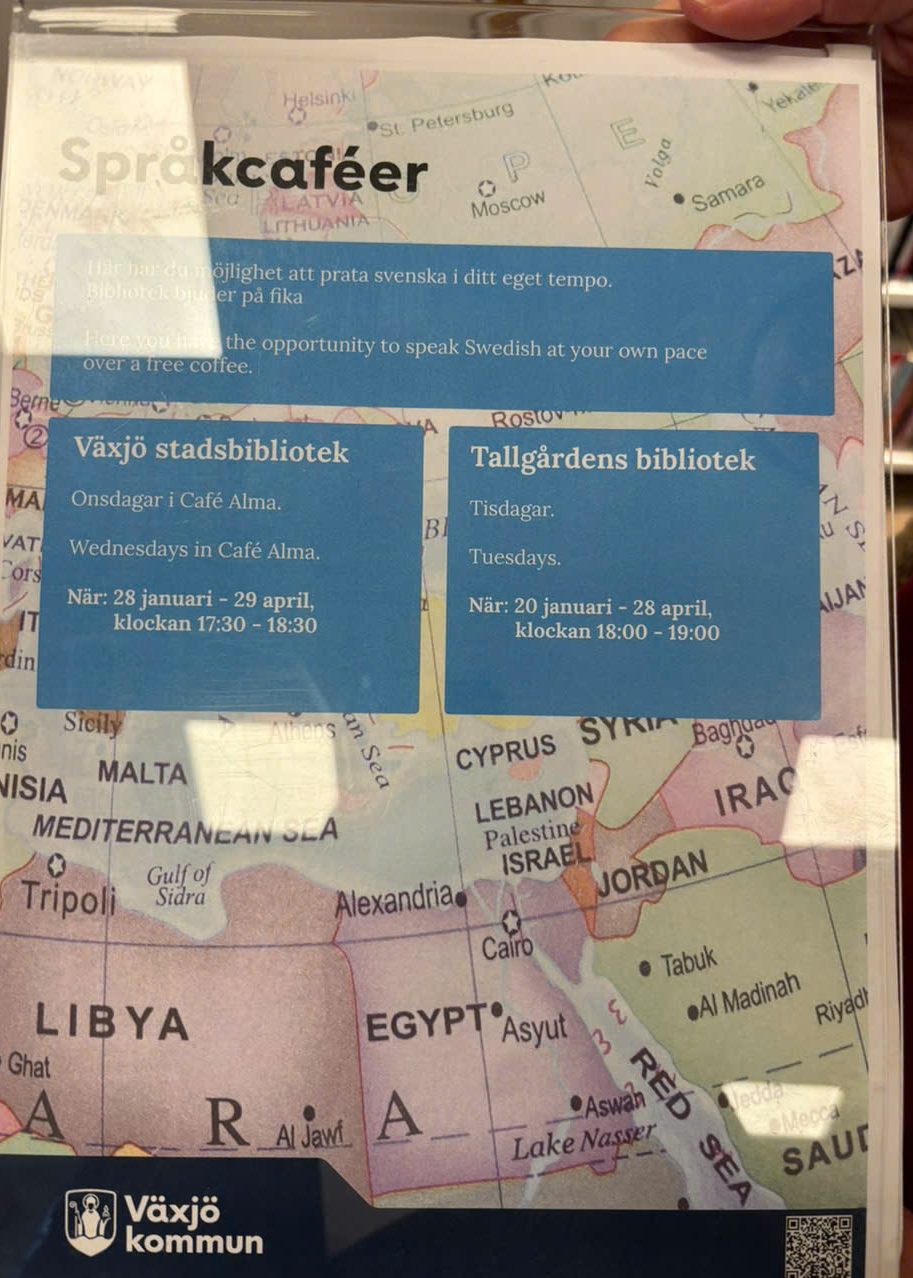
Möteplats Vattentorget Sobright
Röda Korset Araby
Tallgården Araby
Växjö stadsbibliotek
Good luck with your Swedish! Lycka till 😀



0 Comments